
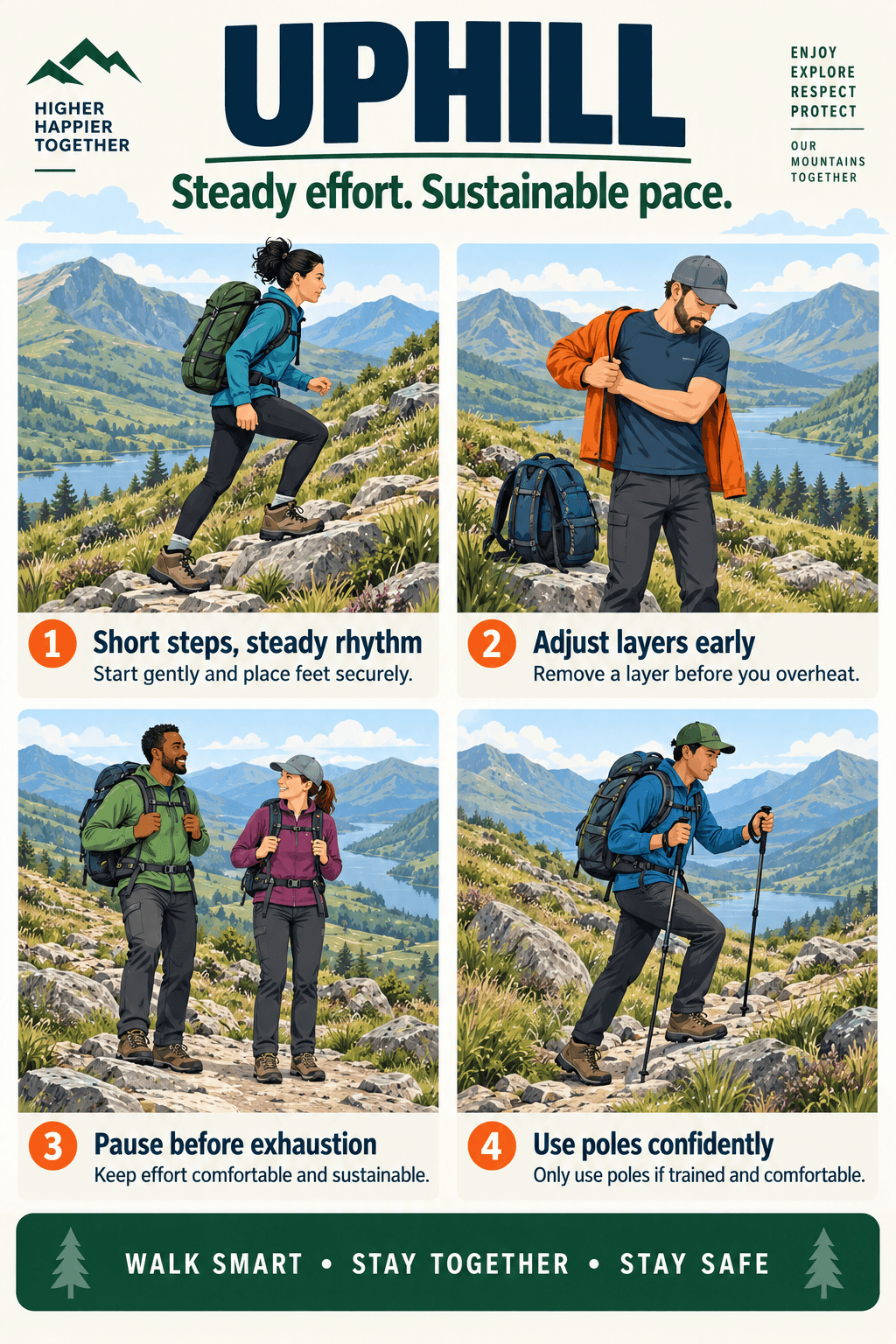
Uphill
Keep effort sustainable and adjust clothing before you become too warm.
- Use shorter steps and a steady rhythm.
- Avoid starting too quickly; keep the whole foot stable where possible.
- Plan short pauses before you are exhausted.
- Use poles only if trained and comfortable with them.
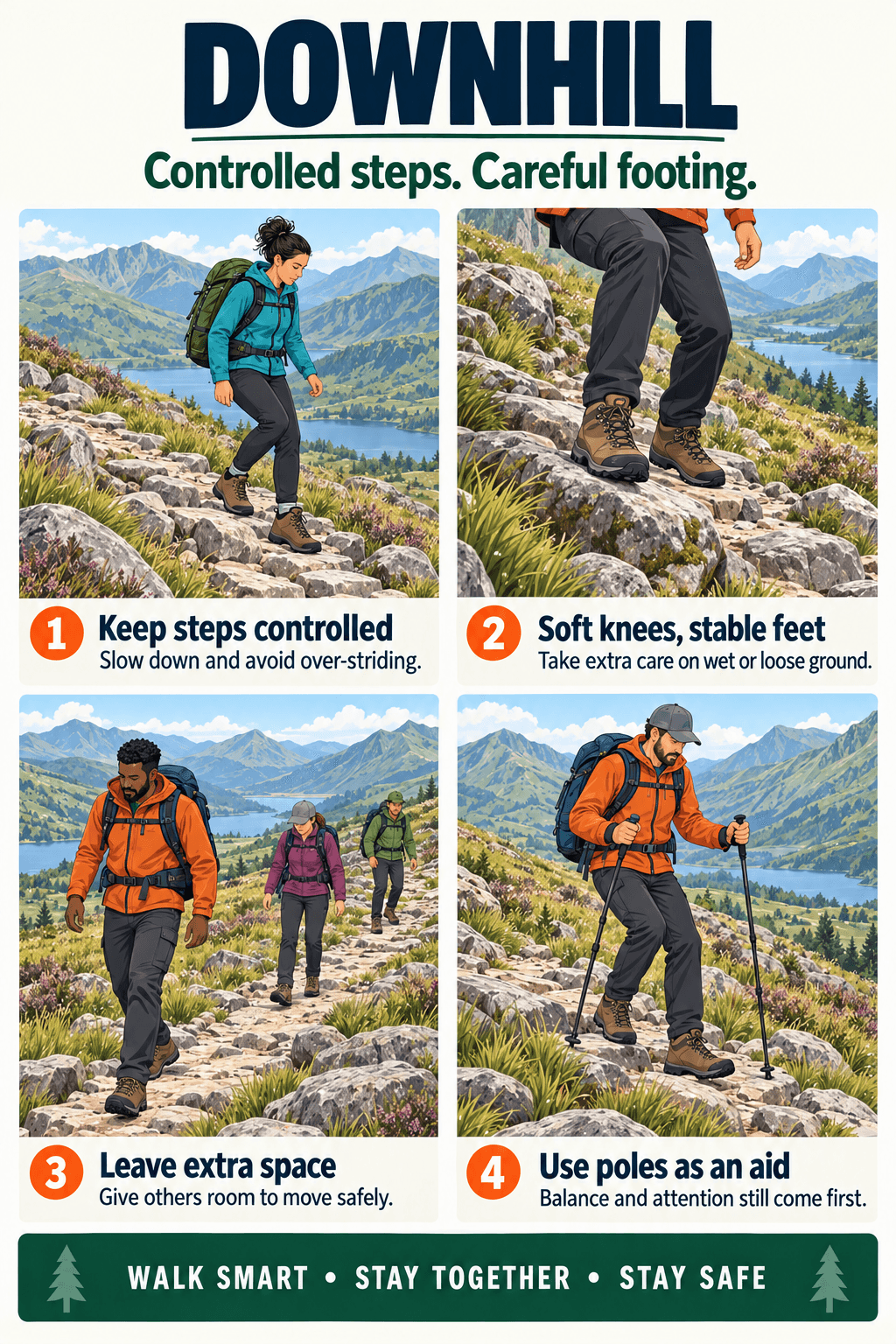
Downhill
Take extra care when ground is loose, wet or uneven.
- Keep steps controlled and avoid over-striding.
- Keep knees soft and place feet deliberately.
- Leave more space between walkers.
- Poles are an aid, not a substitute for balance and attention.
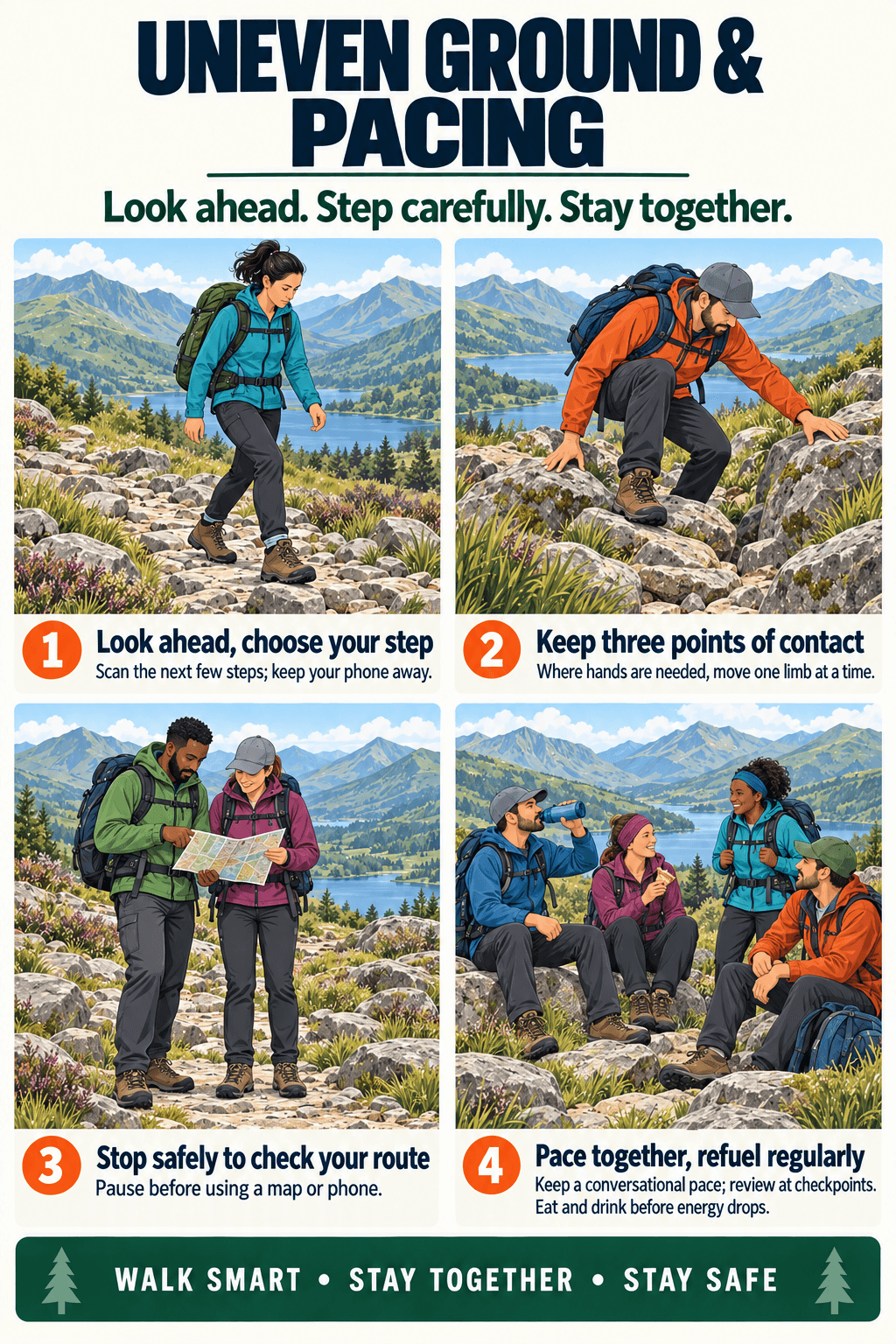
Uneven ground and pacing
Give yourself time to look, choose a stable step and keep the group together.
- Scan the next few steps; do not walk while using a phone.
- Where hands are needed, maintain three points of contact.
- Stop in a safe place before checking a map.
- Use a pace that allows short conversation and review pace at checkpoints.
- Eat and drink before energy levels fall.
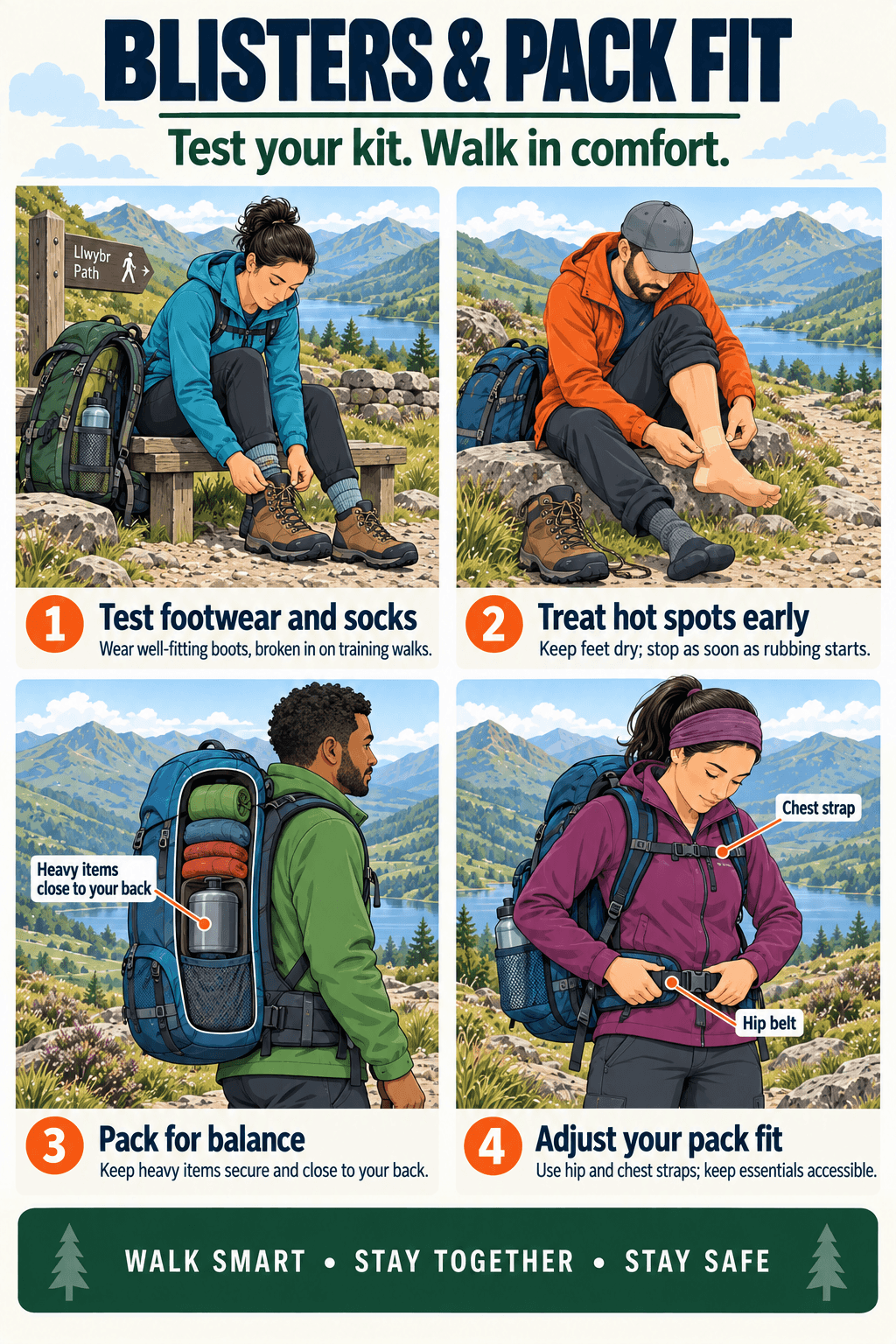
Blisters and pack use
Test footwear and equipment on training walks.
- Use properly fitted, broken-in footwear and test socks.
- Keep feet as dry as practical and treat a hot spot early.
- Keep heavy items stable and close to your back.
- Use hip and chest straps appropriately; keep essentials accessible.
General information only; online guidance does not replace practical tuition from a qualified walking or mountain professional. Seek suitable medical advice if you have health concerns.